Authenticity
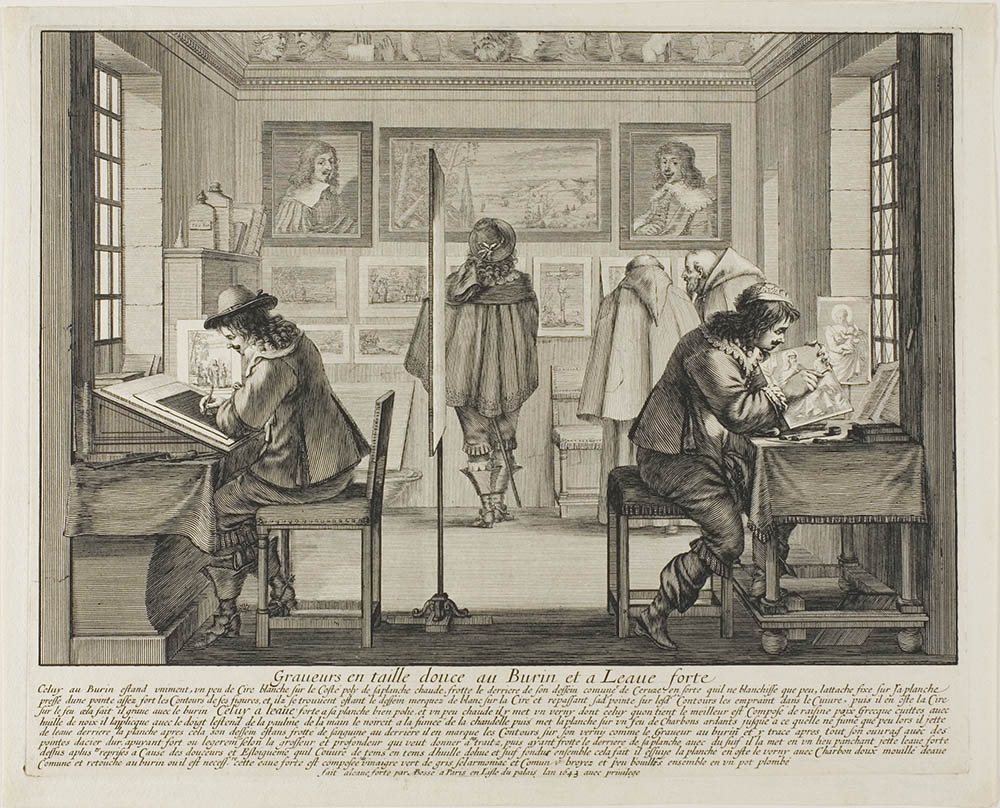
Determining the authenticity of a printed image can be particularly challenging since it is a type of artwork that usually exists in multiples; therefore, different impressions and variants can be in circulation.
It is difficult, even impossible, to make decisions about authenticity without seeing the work in person. Some museums offer expertise to guide owners in their research as a service to their communities, but only when the work of art can be examined in person. Most museums cannot officially authenticate objects.
Research begins by consulting a catalogue raisonné, a publication with a comprehensive list of all known works by an artist, or a clearly defined selection, such as all works in one media. Some catalogues raisonnés include information about copies and forgeries. The Print Council of America’s searchable database, The Index to Catalogues Raisonnés of Works on Paper, is available online on this website.
Other steps to investigate a print’s authenticity include the following:
- Considering signatures and dating. Catalogues raisonnés often provide images of the artist’s signature throughout their career.
- Examining the materials and techniques used to create the print. A museum or the printmaking department of a local university might be willing to help identify media. There are also a number of books that help identify printmaking techniques, several of which are listed on this website (see “Printmaking Techniques”).
- Researching provenance, or the ownership history. For contemporary works, this might include contacting the artist, printmaking workshop, or publisher who helped make the print.
- Asking for an expert’s opinion, such as a scholar of that artist’s work or period or, particularly for contemporary objects, the artist’s foundation or estate. An appraiser may suggest specialists, or auction catalogues may reference experts consulted.
Resources
Appraisers Association of America. “Authenticity.” In The Experts’ Guide to Collecting, [unnumbered] 6–7. New York: Appraisers Association of America, 2023.
Griffiths, Anthony. “Copying prints” and “Reprinting plates and blocks.” In The Print Before Photography: An Introduction to European Printmaking 1550–1820, 114–31 and 132–43. London: The British Museum, 2016.
Ivins, Jr., William M. “Of Copies, Facsimiles, and Other Bothersome Matters.” In How Prints Look: An Illustrated Guide, 124–52. Boston: Beacon Press, 1987.
Riggs, Timothy A., Stephen Goddard, Lauren Hewes, et al. The Index to Catalogues Raisonnés of Works on Paper. Print Council of America, ongoing since 2000.